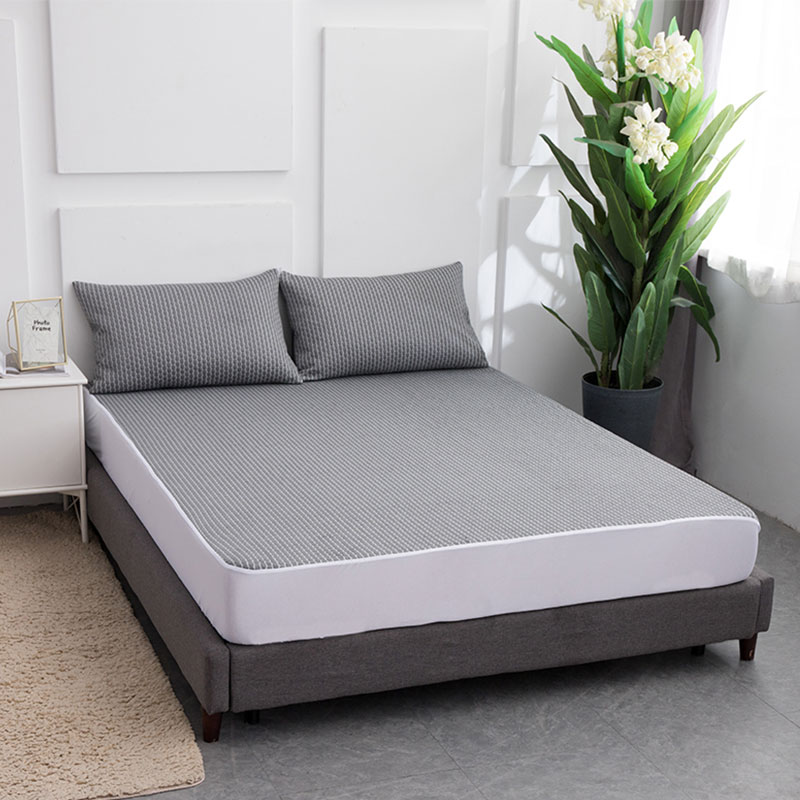
In previous years, market penetration of Bed Protection related products remained relatively low. Many mattress owners underestimate hidden threats: beverage spills, pet fouling, perspiration and accidental leakage can ruin expensive mattresses. Once liquid soaks into inner foam or spring layers, stains and odors are almost impossible to eliminate. Dust mites and bacteria multiply inside damp padding, threatening sleeping health. Although some users understand the value of a Mattress Protector, low‑grade market offerings create bad impressions. Certain cheap Waterproof Mattress Protector uses thin, fragile barrier layers that peel off after several washes and lose waterproof capability. Some products sacrifice breathability for waterproof effect, resulting in over‑heated, clammy sleep. Single‑material choices also limit consumer selection. Users cannot easily find suitable options if they want natural fiber feel together with waterproof performance. Such market gaps push fabric manufacturers to research and develop multi‑functional composite textiles to upgrade the whole Mattress Protector industry.
Advanced composite fabrics lay solid foundation for next‑generation Waterproof Mattress Protector. TPU waterproof fabric and PUL fabric serve as core functional substrates. These polymer materials achieve excellent water‑repellent performance while allowing water vapor to pass through, solving the long‑existing contradiction between waterproofing and breathability. Waterproof mattress protector fabric can be compounded with different surface layers: waterproof terry fabric brings plush, absorbent top surface; waterproof laminated fabric ensures stable bonding between fiber face and waterproof membrane; waterproof bamboo‑fiber fabric infuses natural bamboo‑fiber characteristics such as soft coolness. Relying on these material options, factories produce two popular series: bamboo mattress protector and Tencel mattress protector. They combine natural fiber surface comfort with reliable underlying waterproof barriers. Besides fitted‑style protectors, alternative forms such as waterproof mattress cover, waterproof mattress pad and waterproof blanket offer flexible solutions for special‑size beds, temporary beds and sofa‑beds.
Complete‑function Bed Protection is achieved by combining rational structural design and premium fabrics. A well‑engineered Mattress Protector features elastic deep pocket skirts to fit mattresses of varying thickness. It stays securely anchored without bunching or sliding during sleep. The Waterproof Mattress Protector keeps all liquid on the top surface; users can simply wipe away small spills, or remove the whole item for machine‑washing when heavily soiled. Compared with the heavy mattress itself, the protector is easy to clean and maintain. For home end‑users, it preserves mattress appearance and prolongs service life. For hotels, short‑term‑rental apartments and dormitories, it reduces mattress replacement frequency and lowers overall operational costs.
Global home‑textile retail data shows sustained market expansion. Demand for Mattress Protector, especially Waterproof Mattress Protector, keeps climbing. Buyers no longer only compare prices. They pay close attention to fabric composition: TPU waterproof fabric, PUL fabric and waterproof bamboo‑fiber fabric are frequently searched keywords. Different customer groups show differentiated preferences: family buyers with children and pets prioritize reliable waterproof performance; hot‑sleeping consumers favor bamboo mattress protector and Tencel mattress protector for cooling comfort; commercial accommodation clients value washing durability of waterproof laminated fabric and waterproof terry fabric. Multiple product variants including waterproof mattress cover and waterproof mattress pad satisfy customized size and usage‑habit requirements. The whole product matrix greatly promotes wide‑scale popularization of Bed Protection concepts.
Industry insiders point out that material innovation will remain the core driving force for sector development. Manufacturers keep optimizing composite processing techniques for waterproof mattress protector fabric, aiming for softer hand‑feel, higher wash resistance and more eco‑friendly production. Meanwhile, brands enrich product specifications to cover various mattress sizes across different regions. Practical advice for purchasers: verify fabric specifications before ordering a Waterproof Mattress Protector. Confirm whether the waterproof layer adopts TPU waterproof fabric or PUL fabric. Select corresponding surface material according to personal preference‑‑terry, bamboo‑fiber or Tencel. Proper maintenance will extend service life of your Mattress Protector: follow wash instructions, avoid sharp objects puncturing the waterproof membrane. As more people recognize the significance of Bed Protection, high‑quality waterproof mattress‑related textiles will continue to enter more households and commercial spaces around the world.