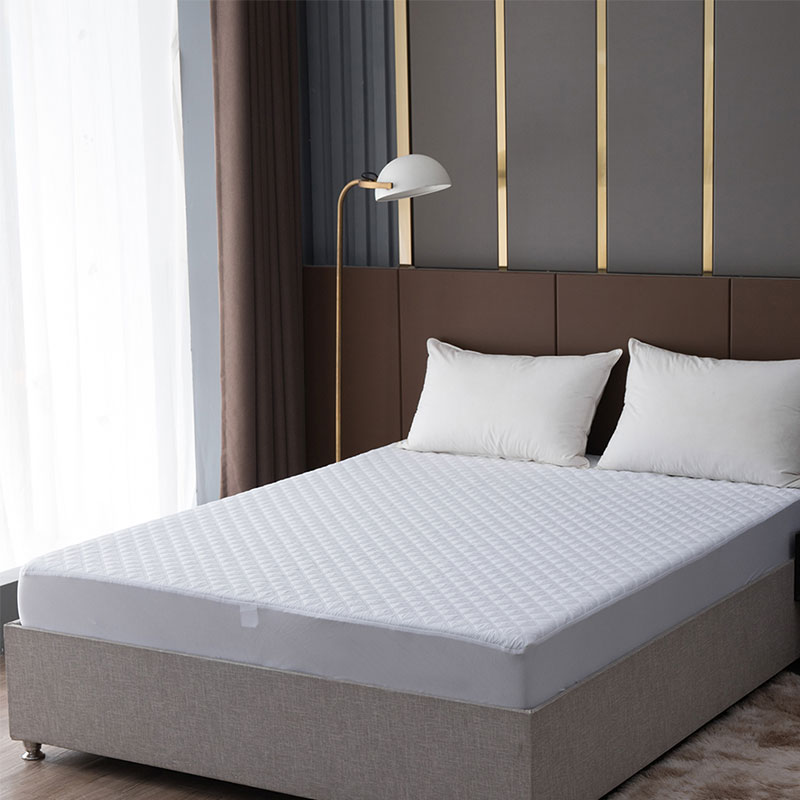
Traditional households used to ignore mattress protection. Many users only rely on bed sheets as the primary barrier for mattresses. Ordinary bed sheets cannot block liquid penetration. Drinks spilled during bedtime, children’s night‑time accidents, pet urine and human sweat will seep directly into mattress inner layers. Stains become hard to remove, bacteria and dust mites breed inside padding, creating hidden health risks. Once the mattress gets soaked and contaminated, thorough cleaning is extremely difficult. Replacing a full‑size mattress brings heavy financial pressure. Even for families who realize the importance of Bed Protection, early‑generation cheap Mattress Protector products on the market have obvious drawbacks. Some low‑cost Waterproof Mattress Protector adopts noisy plastic membranes, which generate crinkling sounds during sleep and ruin sleeping comfort. Inferior base fabrics are non‑breathable, causing heat accumulation and sweaty sleeping experience. Poor craftsmanship also leads to loose fitting, shifting easily after bedding arrangement. All these pain points push manufacturers to optimize material formulas and structural design for better user‑oriented products.
Modern‑grade Waterproof Mattress Protector solves the conflict between waterproof function and sleeping comfort. Premium versions adopt advanced TPU waterproof fabric or PUL fabric as functional barrier layers. These high‑performance materials deliver reliable liquid‑proof performance to block spills, while maintaining micro‑porous breathability. Moisture vapor can escape outward, avoiding stuffy and damp feelings during long‑hour rest. Multiple fabric variants enrich product selections: waterproof terry fabric offers soft skin‑friendly touch; waterproof laminated fabric delivers stable composite structure; waterproof bamboo‑fiber fabric brings natural antibacterial properties and cooling sensation. Based on these raw materials, bamboo mattress protector and Tencel mattress protector combine natural fiber advantages with waterproof features, catering to consumers who pursue eco‑friendly and cool‑sleeping experience. Different product forms such as waterproof mattress cover and waterproof mattress pad provide flexible installation choices for various bed frames and mattress thickness specifications.
As a core carrier of reliable Bed Protection, the well‑made Mattress Protector brings tangible economic and health benefits for end‑users. It blocks liquid, dust, dander and body sweat from contacting the original mattress. Daily cleaning work becomes simple: users only need to take off and machine‑wash the protector, instead of handling bulky, hard‑to‑wash mattresses. It effectively extends mattress service life and cuts long‑term household expenditure. For families with kids, pets, elderly members or people who sweat heavily, the Waterproof Mattress Protector is particularly valuable. It handles sudden liquid accidents and prevents permanent mattress damage. Fitted‑skirt design keeps the whole cover firmly fixed in position without shifting during turning over at night, ensuring stable coverage throughout usage.
Market survey data reflects obvious consumption trend changes. Global buyers no longer regard mattress accessories as optional luxuries. More home buyers, hotel operators, apartment landlords and nursery institutions prioritize Bed Protection when purchasing bedding supplies. The Mattress Protector, especially functional Waterproof Mattress Protector, maintains steady sales growth. Consumers pay close attention to material composition, waterproof reliability, breathability, softness and washing durability. Fabrics including TPU waterproof fabric, PUL fabric and waterproof bamboo‑fiber fabric become key selling points in product listings. Industry analysts mention that market segmentation is deepening. Some customers focus purely on basic waterproof performance, while others lean toward natural material experience brought by bamboo and Tencel blends. Diversified material and product‑type layout helps brands capture different customer segments.
Home textile industry specialists share practical buying and maintenance guidance. When selecting a Waterproof Mattress Protector, check whether the functional layer is made of qualified TPU waterproof fabric or PUL fabric; avoid PVC‑based noisy alternatives. Confirm size compatibility with your mattress. Follow care labels for washing instructions; most quality Mattress Protector supports machine washing for convenient upkeep. Do not use high‑temperature drying which may damage waterproof membrane performance. Looking ahead, as public awareness of Bed Protection keeps rising, manufacturers will continue to iterate composite fabric technology. Upgraded waterproof terry fabric, waterproof laminated fabric and bamboo‑fiber blended materials will further improve sleeping comfort, making high‑performance Waterproof Mattress Protector accessible to more global households.